The insurance mergers and acquisitions (M&A) landscape has entered a markedly different phase, reshaping strategies across carriers, brokers, and investors.
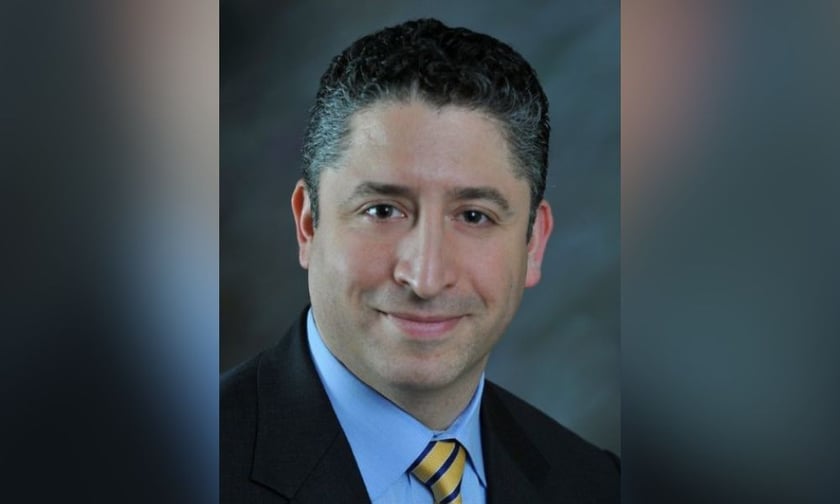
David Hitsky (pictured), a former strategy leader at Oliver Wyman and now partner at L.E.K. Consulting and head of the firm’s insurance practice, said today’s M&A environment reflects a mix of macroeconomic pressures, industry maturation, and structural change that will continue into 2026.
“Rising interest rates and private equity capital being less readily available, combined with more expensive financing, have altered the landscape,” he told Insurance Business. “The money’s simply not as cheap as it used to be.”
At the start of 2025, many analysts predicted an M&A rebound in the second half, on the expectation that there would be more clarity around inflation and US trade policy. So far, that rebound has yet to materialize in insurance. “I’m not sure anything has been finalized,” Hitsky said of the Trump administration’s tariff policies. “Companies are becoming more comfortable being uncomfortable, but that’s not the same as confidently knowing where things are heading.”
Political and macro uncertainty have clearly weighed on activity. Conning’s latest global insurance M&A review for 2024 found overall deal volume fell year-on-year, even as total announced value rose, driven by a cluster of headline-grabbing transactions that reshaped parts of the market.
PwC reported that in the six months to May 15, the global insurance sector recorded 209 disclosed deals with a total value of $30 billion, compared with 297 deals worth $20 billion in the prior six-month period.
This trend is a continuation of recent years. According to Deloitte’s insurance M&A outlook, the number of deals in 2024 declined across all sectors of the industry, but aggregate deal value increased thanks to a handful of large, transformative transactions.
Regionally, conditions are uneven. MarshBerry data shows UK insurance M&A volumes in 2025 are tracking 35% below 2024 levels, though Q3 brought pockets of renewed distribution activity across the UK, France, Southern Europe, and the Nordics.
So, what does this mean for M&A in 2026? Hitsky projected that today’s profile – fewer transactions, more transformative plays – would persist into 2026.
“Capital costs are still high, and I don’t see that changing dramatically,” he said. “We’ve also had so many deals over the last six to 10 years that many attractive mid-sized assets are off the table.”
In the brokerage sector specifically, consolidation has been intense. MarshBerry’s 2024 year-in-review recorded 847 announced brokerage transactions, up 5% from 2023 and the third-highest volume on record. This wave has helped drive the scarcity premium Hitsky described for high-quality, mid-sized platforms.
For smaller roll-up strategies, particularly in the “tail” of the brokerage market, financing is making deals less attractive. Instead, the top 10 players are leaning into scale, seeking both cost efficiencies and greater negotiating leverage with carriers.
Traditional retail brokers are no longer the only (or indeed, even primary) focus for many buyers. Managing general agents (MGAs), program administrators, and services businesses are attracting sustained attention.
Investors’ interest is underpinned by the growth and scale of the MGA model. Howden estimates that MGA gross written premiums globally reached about $150 billion in 2024, including roughly $115 billion in the US and $20 billion in Europe.
“Many of the bigger targets have already been involved in major deals this year,” Hitsky said. “More broadly, I’d say there is less focus on traditional brokers, and more on MGAs and program businesses.”
Claims services and TPAs, especially in medical claims management, are also in focus as “asset-light, cash-generative” platforms, Hitsky added. The UK’s Davies Group this month agreed to acquire Canada’s largest claims processing provider, SCM Insurance Services, in a private equity-backed deal that marks its largest strategic acquisition yet.
Beyond pure deal metrics, Hitsky views artificial intelligence (AI) as a potential catalyst for the next chapter of insurance M&A, especially in distribution.
“If you were designing insurance from scratch, this probably isn’t the model you’d create,” he said of today’s intermediary-heavy, manually intensive ecosystem.
With consumers increasingly comparing insurers to Amazon, Uber and PayPal, AI could unlock new operating models and, in turn, new reasons for transformational dealmaking. “AI may enable a fundamentally different way to operate,” Hitsky said. “(There’s) an opportunity to rethink an industry that’s existed in roughly the same form for 50, 70, even 100 years.”