When game players modded Grand Theft Auto V to make a Samsung Galaxy Note 7 a sticky bomb that could be used as a weapon, Samsung weren’t best pleased - and tried to get videos taken down on you tube about it. And while obviously the giant Korean company was worried about its reputation were understandable> The reality was, however, that the phone had real life issues, and had to be recalled as some burst into flames. That lithium battery inflammability issue though is still real - despite improvements hundreds of different power banks exist - made at varying levels of sophistication - and that is a real issue for safety.
On the back of this, Australia's major airlines are implementing stricter portable power bank restrictions from next month, marking a critical change in how the insurance industry must approach lithium battery risks in aviation.
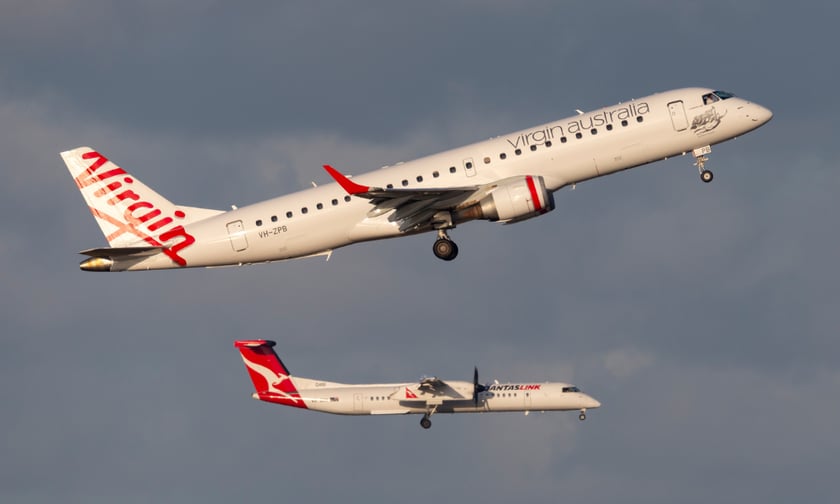
Virgin Australia has announced that from December 1, passengers will be required to keep power banks within sight and easily accessible throughout flights. Qantas, QantasLink and Jetstar are following suit from December 15. The move comes after a mid-air fire involving a power bank on a Virgin Australia flight from Sydney to Hobart in July—an incident that crystallizes a much broader and rapidly escalating insurance challenge affecting aviation, product liability, and consumer protection lines of business.
The July Virgin Australia fire provides the immediate catalyst for action, but it is merely the most recent in a troubling sequence of incidents. The incident follows several recent international cases, including an Air China flight that made an emergency landing last month in Shanghai after a lithium battery caught fire.
An Air Busan plane was also destroyed earlier this year at South Korea's Gimhae Airport after a similar incident involving a power bank.
The ATSB has documented five in-flight fires involving power banks on Australian or Australian-registered aircraft since 2016 alone, yet Australia's airlines only now are moving to align with the global response.
Lithium battery-powered devices represent one of the most pressing emerging risks facing insurers today. The scale of the problem is becoming impossible to ignore. The Federal Aviation Administration (FAA) has now tracked 50 verified battery-related incidents through August 2025 alone. This isn't a niche concern—it's a systemic issue that demands immediate underwriting strategy adjustments across multiple lines of business.
The shift toward standardized power bank restrictions by major airlines signals that the industry has reached a consensus: these devices pose an unacceptable risk in the confined environment of an aircraft. At least 15 airlines globally have now implemented bans or severe restrictions, reshaping how aviation insurers must evaluate their exposures.
Virgin Australia's approach takes effect first on December 1, requiring passengers to limit themselves to two power banks with a capacity of up to 100 watt-hours without approval, with larger units between 100 and 160 watt-hours requiring airline authorization. Critically, power banks must remain easily accessible—in seat pockets, under seats, or on the passenger's person—and explicitly cannot be stored in overhead lockers. The devices cannot be used or charged onboard, though passengers may continue to use in-seat power ports for other devices.
Qantas, QantasLink and Jetstar adopt similar but slightly more permissive thresholds from December 15, allowing two power banks per passenger up to 160 watt-hours each, with the same accessibility requirements. All three carriers prohibit charging onboard, including through in-seat USB and power ports.
What makes this moment significant for insurers is not merely what's happening in Australia, but the accelerating global synchronization around battery safety protocols. The restrictions now represent a coordinated industry response to an escalating risk profile.
Asian carriers have essentially standardized power bank bans across the region. Singapore Airlines, Scoot, Thai Airways, South Korean Airlines, EVA Air, China Airlines, Vietnam Airlines, and VietJet all prohibit power bank use. Malaysia Airlines, meanwhile, requires power banks be stored in carry-on luggage under seats—a requirement that took effect on April 1, 2025.
In the Middle East and beyond, Emirates introduced stricter power bank rules from October 1, 2025, joining Cathay Pacific and Korean Air in implementing comprehensive bans this year. These are not fringe carriers—they represent the backbone of international aviation.
The insurance implications extend far beyond flight safety, though that alone justifies urgent attention. With 44 per cent of passengers travelling with power banks according to an International Air Transport Association (IATA) survey, and travelers now carrying an average of four lithium battery-powered devices, the product liability exposure is substantial.
Regulators have also observed worrying consumer-product trends. The Australian Competition and Consumer Commission (ACCC) has reported a 92 per cent rise in lithium-battery incidents between 2020 and 2022 and has issued 17 power-bank recalls since 2020. ACCC deputy chair Catriona Lowe said some users had suffered burn injuries and property damage due to overheating units.
Concerns over battery safety were reinforced again two weeks ago when a man suffered burns in Qantas’s Melbourne business lounge. The power bank in his pocket overheated and caught fire, prompting the evacuation of about 150 people. Qantas said the lounge was cleaned and reopened after emergency crews responded, and the passenger was taken to hospital following initial treatment at the scene.
Globally, the broader context is troubling for aviation insurers and risk managers. The US Federal Aviation Administration has tallied hundreds of lithium-battery incidents on passenger aircraft since 2006, with annual cases rising sharply as more devices are carried on board. Most involve small fires in phones, laptops, vapes or power banks, but severe events — such as the 2010 UPS Flight 6 crash, traced to a cargo pallet of lithium batteries — have reshaped international rules. ICAO bans standalone lithium-ion batteries as cargo on passenger aircraft and imposes strict packaging and charge-state requirements on freighter operators.
For underwriters, the proliferation of personal electronics has created a fast-evolving exposure. Airlines have increased crew training on thermal runaway, expanded use of fire-containment bags, and revisited emergency procedures to limit the risk of a single device compromising an aircraft.
As passenger numbers return to pre-pandemic levels and travellers routinely carry multiple battery-powered items, the industry’s push for harmonised policies reflects a risk environment no longer limited to cargo holds. The challenge now, insurers say, is managing a hazard that travels in every cabin, every day.