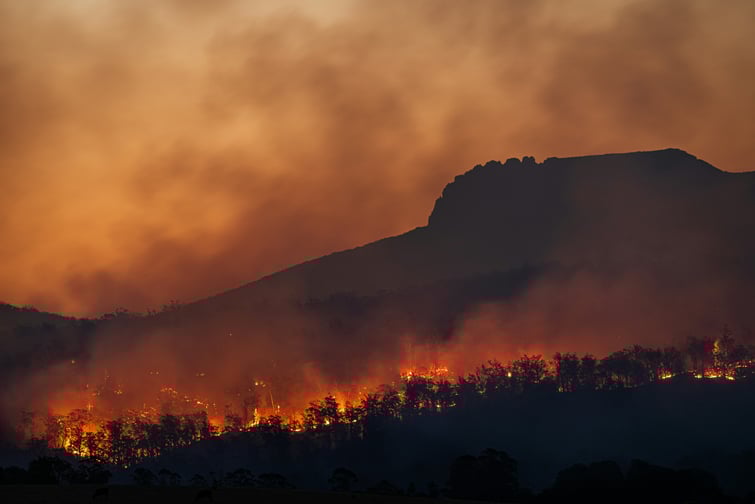
As the 2025/26 bushfire season begins, New South Wales authorities and the insurance industry are implementing a range of measures in preparation for the upcoming season. The response comes in the wake of the 2019–2020 “Black Summer” bushfires, which the Insurance Council of Australia (ICA) estimates led to insured losses of $2.4 billion and overall economic losses exceeding $10 billion. The event resulted in the destruction of more than 3,000 homes and at least 33 fatalities, impacting the majority of Australians.
Transport for NSW has coordinated with emergency agencies and more than 170 local and regional Bushfire Emergency Management Committees in advance of the bushfire season. In 2025, the agency participated in over 60 exercises simulating flood and bushfire scenarios.
One of the recommendations from the 2020 NSW Bushfire Inquiry – Recommendation 65b – was to improve public access to emergency information. In response, Transport for NSW installed 219 new roadside signs across the state, displaying local ABC radio frequencies in areas identified as high risk or with limited mobile coverage. This brings the total number of such signs to over 300 statewide.
Transport for NSW has also placed new 30,000-litre water tanks at rest areas along the Pacific Highway in the Clarence Valley, supplementing earlier installations in other regions. These tanks are available for use by the NSW Rural Fire Service (RFS) and Fire and Rescue NSW as water access points during emergencies. Roadside vegetation management is also underway, with crews clearing combustible material and creating firebreaks along major corridors.
Howard Collins, Transport for NSW coordinator-general, commented: “Transport for NSW is proud to be continuing to deliver on the NSW Bushfire Inquiry recommendations to help keep people in our communities safe in times of emergency and provide safe travelling conditions for motorists on the road network. Hosting water tanks in our rest areas is an obvious solution to past problems accessing water once firefighters have depleted onboard supplies. This is all about reducing the risk of having road closures and importantly the chance of there being devastation in the event of a fire.”
The installation of ABC frequency signs is intended to provide communities with access to emergency information if other communication channels are unavailable. Donna Field, ABC head of emergency, said: “During emergencies, radio remains a reliable source of information. It can often continue to deliver critical updates even when other communication channels are disrupted or unavailable, ensuring communities stay informed when it matters most.”
Transport for NSW has also allowed councils to publish local road information on the Live Traffic NSW platform, which is integrated with major navigation apps. Since the system was introduced, councils have reported nearly 19,000 unique incidents on the platform.
Insurers are advising residents and businesses on risk reduction measures as bushfire danger remains elevated in parts of New South Wales. IAG – which includes brands such as NRMA Insurance, CGU, WFI, and ROLLiN’ – has advised on risk mitigation and the need for regular insurance reviews.
Kathryn Turner, IAG meteorologist and senior weather risk analyst, noted that research indicates bushfire weather hazards are increasing rapidly, with climate change contributing to hotter, drier, and more fire-prone environments. “Bushfire season in southern Australia officially runs from October through March, and the risk of bushfire becomes significantly higher after prolonged periods of low rainfall and increased heat, which increases fuel availability as vegetation dries out,” Turner said.
Luke Gallagher, IAG executive general manager of claims, added: “Bushfires are devastating, and safety should always be the number one priority. The loss of life and properties, and the impact on communities is long-lasting as seen with the 2019–2020 Black Summer bushfires. I would urge all Australians to take the time to check their bushfire risk and consider attending a free Australian Red Cross EmergencyRedi Workshop in their local area to learn their local risks and prepare for extreme weather.”
Insurance professionals and their clients are advised to:
Ben Millington, RFS deputy commissioner operational coordination, said: “Every minute saved in accessing water can make a real difference to the protection of life, property, and the environment. It is an important reminder that while agencies continue to prepare and invest in readiness, bushfire safety is a shared responsibility.”