
Best Insurance Companies for Construction
in the UK | 5-Star Construction
Jump to winners | Jump to methodology
Building trust: insurers delivering
It’s been a period of tough competition in the construction sector as insurance providers battled to win business. Over the year between May 2024 and May 2025, UK government figures show 0.2% growth in the construction output volume seasonally adjusted.
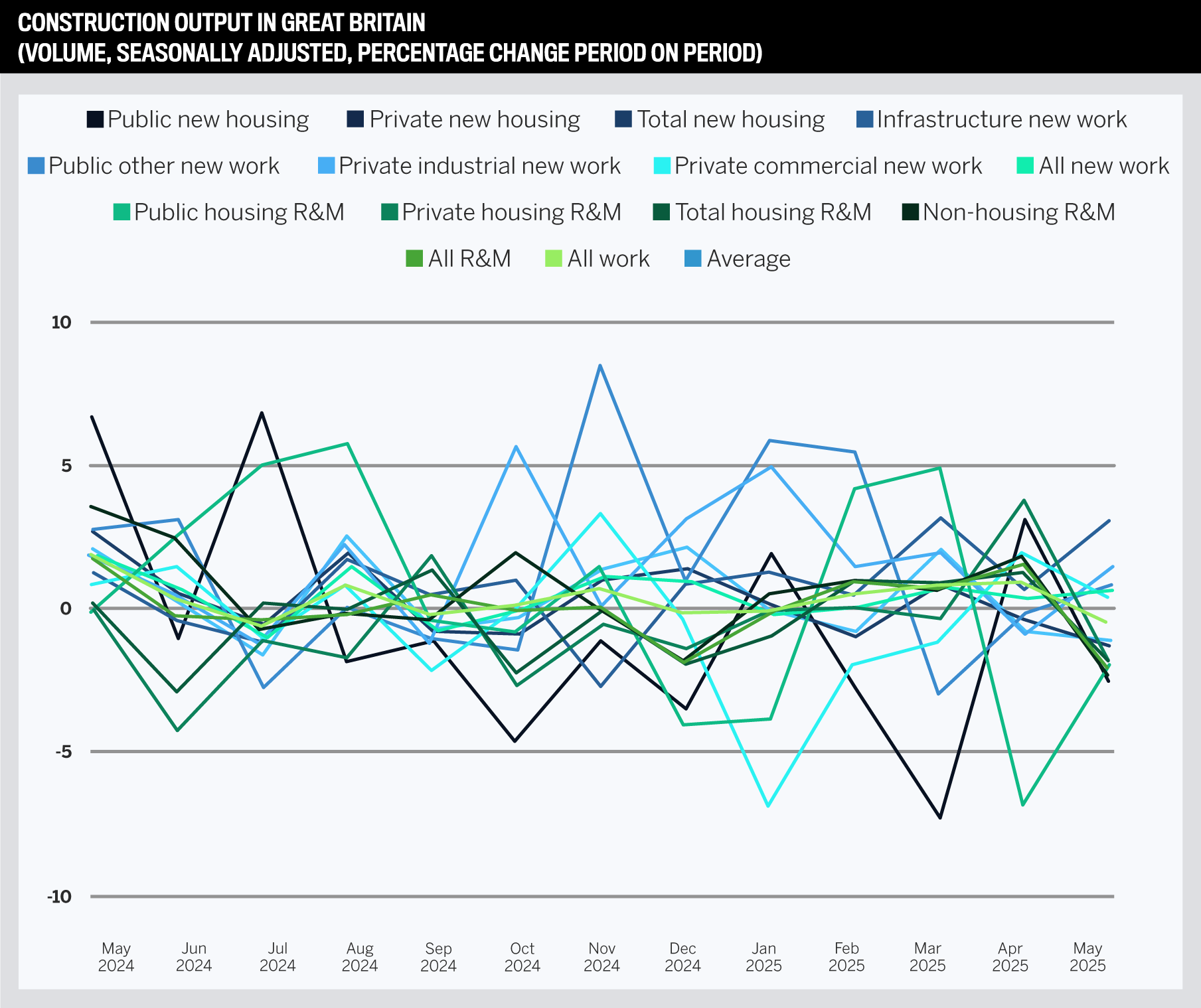
To determine the standout performers, Insurance Business UK surveyed brokers from across the country to discover what they were looking for and who had met their expectations.
Analysis of IBUK data 2023–2025
Across the last three years, brokers have been asked: Which of the following criteria is most important to you when choosing an insurance company?
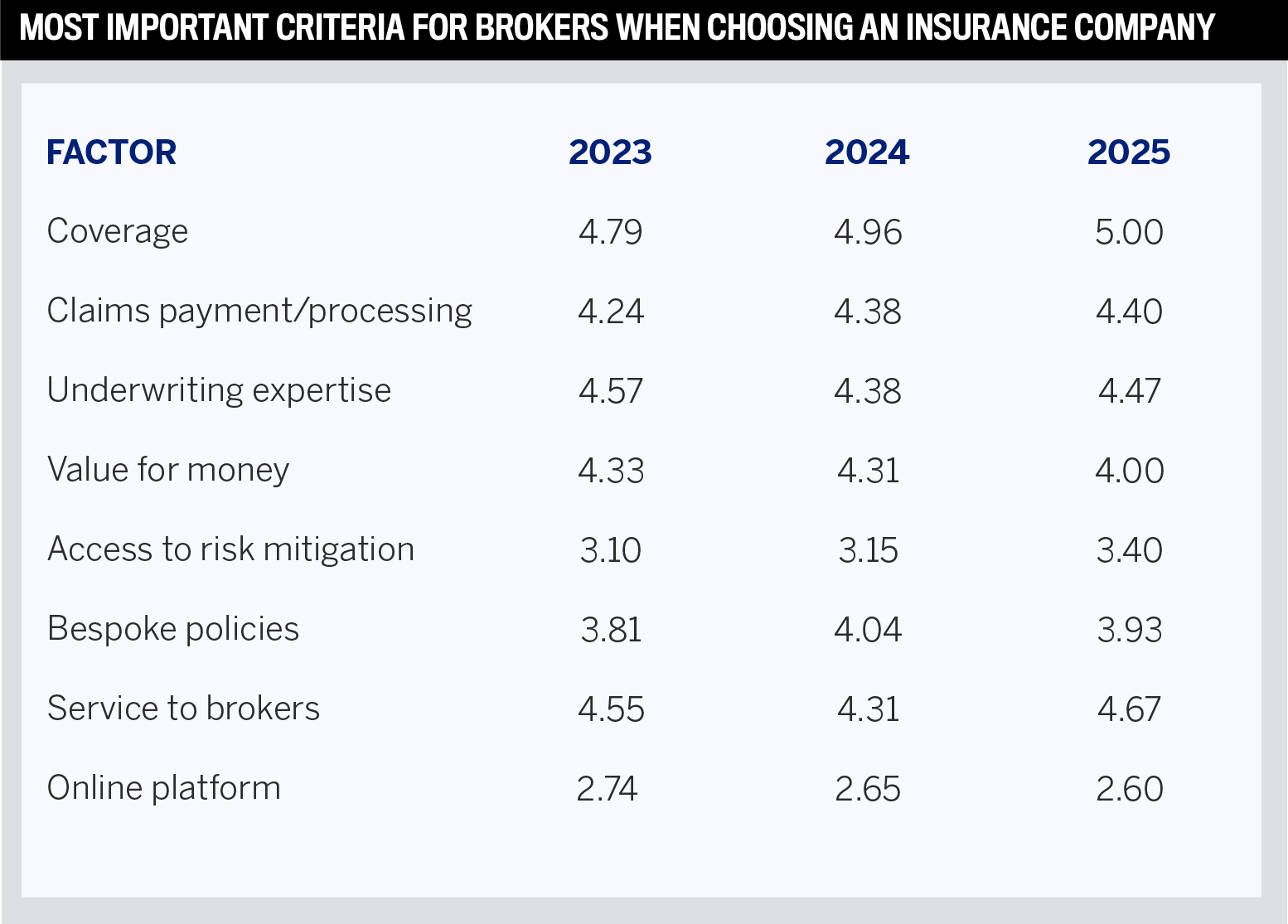
1. Coverage
-
Trend: Consistently the highest-rated factor.
-
Conclusion: Most valued attribute and its importance is increasing, suggesting brokers are prioritizing comprehensive insurance solutions more than ever.
2. Claims payment/processing speed
-
Trend: Gradual improvement.
-
Conclusion: Indicating growing expectations for efficient claims handling.
3. Underwriting expertise
-
Trend: High and stable.
-
Conclusion: Remains a core value, but brokers may have perceived a temporary dip in quality in 2024, with a partial recovery in 2025.
4. Value for money
-
Trend: Slight decline.
-
Conclusion: Still important, but brokers are rating it lower over time, possibly due to rising premiums or a shift in focus to other factors like coverage and service.
5. Access to risk mitigation partners
-
Trend: Gradual increase.
-
Conclusion: Reflecting a growing interest in proactive risk management, though it remains less important than core insurance services.
6. Ability to create bespoke policies
-
Trend: Fluctuating.
-
Conclusion: Peaked in 2024, indicating that while brokers appreciate flexibility, it’s not as critical as coverage or service.
7. Service to brokers
-
Trend: Strong and rising.
-
Conclusion: Service to brokers is highly valued and a key differentiator.
8. Online platform
-
Trend: Declining.
-
Conclusion: Consistently rated the lowest, indicating that brokers either find current platforms lacking or do not prioritize digital tools.
Key conclusions
-
Coverage and service dominate: Coverage and service to brokers are the most valued and have increased in importance, signaling that brokers prioritize reliable protection and strong relationships.
-
Claims handling and underwriting: These remain core expectations, with incremental improvements or stability.
-
Value for money declining: There’s a noticeable dip in perceived value, which could reflect market pricing pressures or shifting priorities.
-
Risk mitigation growing: There’s a slow but steady increase in the value placed on risk mitigation partnerships.
-
Digital tools lagging: Online platforms are consistently the least valued, suggesting either dissatisfaction or that digital transformation is not a top priority for brokers in this sector.
Coverage and service matters
CNA Hardy – a Brokers on Construction 2025 winner – feels its edge in coverage stands with its contractor’s package policy, designed with flexibility and practicality in mind. It offers several key extensions that are typically included as standard, ensuring clients can meet their contractual obligations.
Casualty class manager Justin Godman says, “Examples of commonly included covers are part products, accidental discovery of asbestos, extended product liability aggregate limits, and flexible bona fide sub-contractor conditions.”
The firm is similarly on the front foot when it comes to service, as it distributes its contractor’s package only through a select panel of brokers who are construction experts.
“They share our commitment to delivering high-quality coverage and exceptional service,” explains Godman. “This focused approach enables us to deliver the basics well: hitting deadlines, doing what we say we will do, being available and responsive, and seeking solutions for our clients’ needs.”
Another of the 2025 Brokers on Construction winners, DUAL UK, also maintains a strong link with brokers, who are given a dedicated and back-up underwriter as a point of contact. The company aims to contact broker partners a maximum of 21 days prior to renewal and to begin discussions on new business within 24 hours of receipt of enquiry.


Steve KellyDUAL UK
“We’ve recruited five underwriters in the last six months, so that’s pushed up the capability. It’s also helped from a service perspective, so that we’re able to respond quickly to inquiries for individual quotes,” says managing director of construction Steve Kelly.
And he continues how they counter the problematic situation of assessing at the outset the contract period and contract price. He adds, “That can change during the period of a project, and we need to be able to respond accordingly and be able to continue the insurance unaffected by that happening.”
When it comes to coverage, DUAL’s products are packaged to be flexible to provide optional covers for property damage to the works, physical damage to the contractor’s plant, which may be both owned and hired in, and provide public/product liability.
Kelly says, “In addition, we can also provide delay in start-up for project risks and employers’ liability for annual business.”
Another extra that DUAL offers is cover for properties left unattended pending contract works commencing and providing construction bonds as well.
Another of the Brokers on Construction 2025 winners, QBE, ensures outstanding coverage thanks to its joined-up structure, as underwriting, claims and risk teams work hand-in-hand.
“Their combined experience across both the insurance industry and construction sector tracks sector-specific risk landscapes and anticipates emerging trends, from ESG measurement to contractual or regulatory complexity,” says Neil Fleming, UK construction and engineering portfolio manager.
This integration means QBE offers clients a meaningful insight into their total cost of risk. The firm provides comprehensive construction cover, including contractors combined, employers’ and public/products liability, contractor’s all risks, surety, professional indemnity, cyber, and project-specific OCIP/CCIP programs.
Fleming says, “Our policies are tailored to the needs of construction businesses large and small, whether operating in the UK or globally, ensuring flexibility and relevance. We like to understand our customers’ requirements and take a flexible approach to policy terms and conditions.”
An additional service benefit QBE delivers is its Minds in Business mental health platform, which was developed in response to real-time trends seen and experienced by the firm’s construction customers.
Insight into 2025 broker ratings
Brokers all over the country shared their valuable insight, giving scores to the leading providers’ performance.
CNA was consistently ranked but given a lower score for its online platform. However, this is no surprise to the firm because it does not offer an online product for construction, and instead focuses on delivering tailored solutions for mid-sized and large contractors.
“Our approach is therefore more consultative and hands-on,” says Godman. “However, our CNA Online platform, which supports our excess of loss product across all sectors including construction, is designed for speed, simplicity and competitiveness. It consistently receives strong feedback for its ease of use and efficiency and was recently recognised for its excellence.”

Value for money is what brokers feel is DUAL UK’s relative strong point that gives the firm an advantage over competitors. The firm attributes this strength to its investment in technology to make systems more efficient and the decision to move simple admin tasks offshore, allowing underwriters to concentrate on their core roles.
Kelly says, “Being granular in the components that make up our price ensures that we focus on such factors as claims inflation for the construction sector, rather than a generic figure overall.”
DUAL is also expanding its team outside of London, where it has historically conducted the vast majority of its business. This includes recruitment in Manchester and the West Midlands to continue growing its client base.
“We’re very London-centric at this moment in time; that’s not necessarily going to be the case going forward,” Kelly says.
Brokers rated QBE’s major strength as its underwriting experience. The firm mandates underwriters work closely with claims and risk teams for holistic decision-making. This enables the firm to understand construction contract complexity and tailor solutions accordingly.
“With the construction sector changing at such a pace, we are mindful of new construction methods, materials and technology, and the risks that they present,” adds Fleming. “We offer support and solutions rather than creating barriers.”
QBE’s in-house Risk Solutions team also engages a panel of specialist partners in areas including but not limited to fire, water, mental health and cyber. The team helps integrate these services into the firm’s broader risk strategy.
Fleming says, “Each provider is recognised as a leader in their field with something different to offer. We work with our panel members because we know they’re the best at what they do, and we know they’ll match the same high standards you’d expect from QBE.”
Building goals
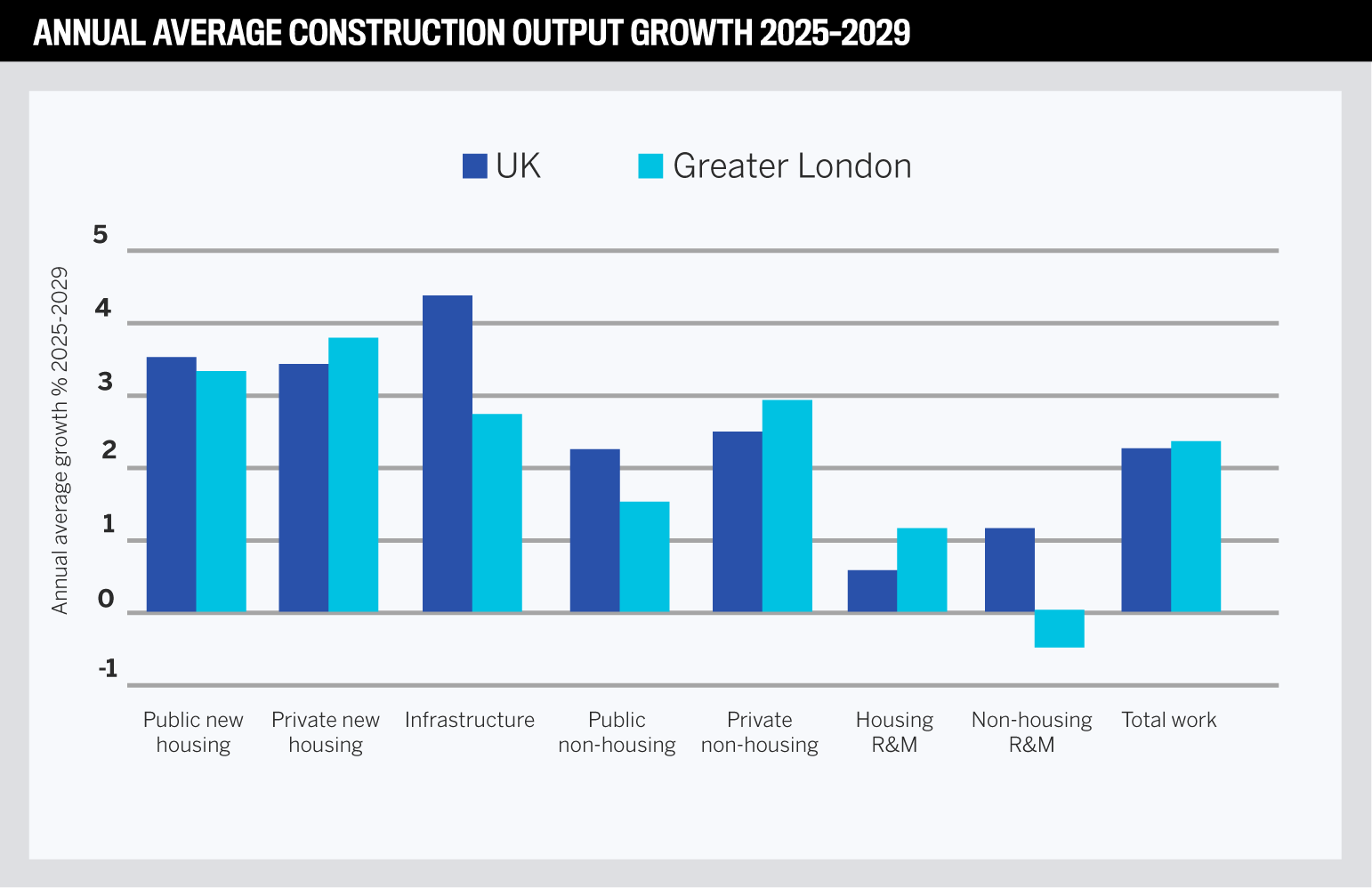
The Construction Industry Training Board predicts a 2.1% increase in building across the UK and more particularly by sector:
-
infrastructure 4.2% per year on average
-
public new housing 3.4% per year on average
-
private new housing 3.3% per year on average
DUAL UK has noticed a rise in activity in its operations, which has led to the challenge of planning permission being granted, but the biggest issue is insuring projects with a lack of skilled labour.
Kelly says that, to meet the demand, there will likely be a surge in hiring of foreign labourers. This leads to safety and liability concerns for DUAL, which has been communicating directly with contractors to ensure that proper protocols are being followed.
“You’re going to get potentially a workforce coming from further afield than they would have done in the past and not necessarily be familiar with the UK’s requirements around health and safety and the like,” he says. “We need to make sure that the toolbox talks are being done as regards health and safety requirements. When we go on risk survey sites, we can actually speak to the insured to raise the importance of doing this consistently across all the sites.”
QBE is thriving due to its long history of working with the largest contracting partners. It is well-positioned to support the construction sector’s ambitions and plans for housing, transport, and energy development.
“Our deep knowledge of the commercial realities and contractual structures of major projects enables us to support customers with tailored solutions that support efficient delivery and improved risk transfer,” explains Fleming. “As government funding and procurement programs scale up, QBE is ready to help clients navigate them.”
Ambitious and forward-looking is the calling card of CNA Hardy, which is creating a single Project Construction All Risks product in anticipation of a boost in building. It will increase flexibility for clients looking to take advantage of the increase in building projects.
Theft crisis
Small tool theft is an endemic problem in the UK construction industry. While there was an 18% drop in thefts in 2024, the issue is still live, and according to data from Direct Line Group:
-
40 million worth of tools were stolen in 2024
-
a tool theft was reported to the police on average every 21 minutes
-
25,525 tool thefts were reported in 2024
According to Kelly, there is a particular demand for costly surveying equipment. To combat the risk of theft, DUAL launched its DNA+ program, which puts a marking on construction equipment that thieves cannot remove.
“We give a premium discount if that facility is installed, and we also actually give a 50% reduction in the excess for theft as well.” He adds, “It’s about protecting the equipment, particularly when it’s left overnight in vehicles.”
DUAL advises firms to keep all equipment in vehicles which are alarmed and parked in a compound. Being vigilant with theft risk analytics allows QBE to track important tool theft trends, then pass them to its clients to mitigate risk.
“We pay attention to the data, and our Risk Solutions team regularly reviews claims data to identify trends and hotspots for theft. This analysis enables us to advise customers on security measures, ranging from improved security and lighting to asset tagging and tracking technology,” says Kelly.

Neil FlemingQBE
QBE also provides clients with incentives such as security management reviews and access to specialist partners for enhanced protection.
Fleming adds, “The aim isn’t to encourage more spending on security but to help customers select the right tools and strategies to maximise ROI and resilience – and where possible, we support flexible coverage arrangements that incentivise the rollout of robust theft deterrence.”
Embracing new tech
Innovative technologies have become an increasingly important component of the construction insurance industry. For example, AI is providing value in areas of the industry such as:
-
project planning
-
traffic management
-
construction automation
-
risk assessment and safety
The UK’s target to reduce emissions to 20% of 1990 levels by 2050 is creating huge opportunities for companies that design and build greener buildings and structures.
Meanwhile, building information modelling processes have been adopted by a large number of companies looking to take advantage of the technology’s ability to deliver a digital representation of the physical and functional characteristics of a building or infrastructure.
DUAL is working on including 5G video technology in contractor packages.
“The 5G is able to identify where kickboards aren’t installed, where PPE is not being worn and the like. And again, that’s potentially something going forward that we could support the implementation through beneficial terms in policy, premium and deductible,” Kelly says.
An important component of QBE’s technological innovation has been its Return + Program, which allows digital case tracking, resulting in the mitigation of work-related injury absence.
“It enables early intervention for injured workers and is underpinned by digital case tracking and helps businesses avoid excess work-related injury absence,” says Fleming. “As a result, this reduces the absence costs incurred for our policyholders and reduces the loss of earnings component of any claim made.”
Best Insurance Companies for Construction
in the UK | 5-Star Construction




- Allianz
- Aspen
- Aviva
- AXA
- CNA Hardy
Methodology
To select the best construction insurers for 2025, Insurance Business UK sourced feedback from insurance brokers. IBUK’s research team began by conducting a survey of a wide range of brokerages to determine what brokers valued in a construction insurer. The team also spoke to hundreds of brokers across the country, asking them to rate the construction insurers they had worked with over the past 12 months.
The in-depth information gathered enabled the research team to assign weighted values to each of the criteria being rated by brokers. At the end of the research period, the insurers that received the highest rankings in terms of work quality, specialist expertise and client service were named 5-Star award winners in construction insurance.
Keep up with the latest news and events
Join our mailing list, it’s free!