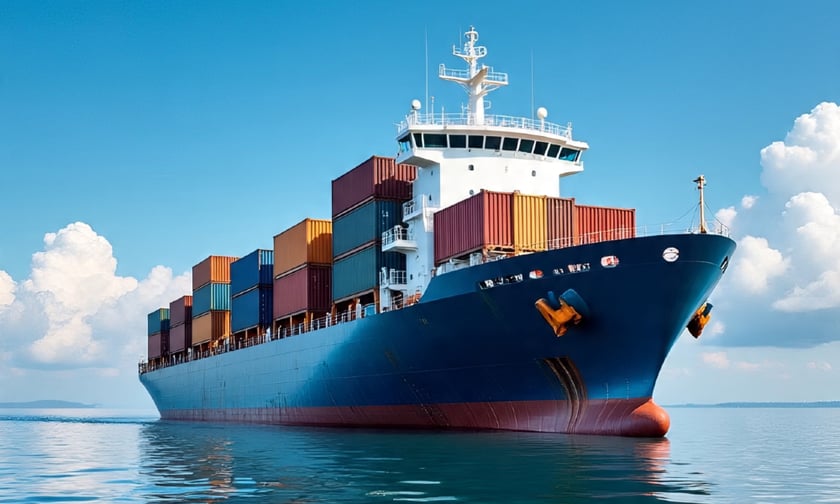
The worldwide marine insurance market has reached its highest ever premium volume, edging close to $40 billion in 2024. Yet industry leaders caution that the surge in revenues is losing pace, with evidence of softening in core lines of business.
Figures unveiled at the International Union of Marine Insurance (IUMI) annual conference in Singapore show that global premiums rose by 1.5% last year, bringing the sector’s combined top line to US$39.92 billion. This marks a new peak, but one that contrasts sharply with the more buoyant expansions of 5.9 per cent in 2023 and 8.3% the year before.
“Within the marine sector, markets have their own unique approach; some are inviting renewal on level terms, some are pushing for 5-10% increases, some are adding increased excesses,” Claire Hoole of Circle Marine told Insurance Business.
Cargo insurance remains the industry’s cornerstone, commanding 56.7% of total premiums. Hull and machinery cover follows with 24.2%, while offshore energy accounts for 10.9 per cent and marine liability 8.2%.
By territory, China has cemented its position as the largest single cargo market, generating 17.6% of premiums. Lloyd’s stands at 9.7% and the United States at 6.9 per cent. Brazil and Germany, both at 4.7%, narrowly outpace the London companies market, which sits at 4.3%.
Europe still leads in overall market share, but its dominance is waning as Asia-Pacific, led by Chinese underwriters, expands steadily. Asia accounted for 60 per cent of premium growth in 2024, signalling a gradual but persistent narrowing of the gap with Europe.
Loss ratios in cargo continue to improve, falling for the seventh consecutive year. Analysts attribute this to relatively stable attritional claims, which have encouraged both fresh capital and the re-entry of former market participants. The influx of capacity, however, is driving fierce competition.
The hull and machinery segment tells a different story. Loss ratios have climbed each year for the past five years, with recent rerouting around the Cape of Good Hope exposing ships to harsher weather conditions. The ageing global fleet – as owners delay scrapping – and inflationary pressures on repair costs are also pushing constructive total loss probabilities higher.
The Nordic region leads the hull market with a 12.9% share, ahead of China on 11.6%, Lloyd’s on 8.7 per cent, Singapore at 7.9% and London companies on 7.4%.
London remains the central hub for offshore energy business, where UK-based companies hold 31.6% of the global market and Lloyd’s a further 30%. Brazil and Mexico follow at just over 8% each. Loss ratios in this sector have declined markedly since 2020, although attritional claims are now increasing amid strong demand for offshore vessels.
The picture for protection and indemnity (P&I) is less clear, following changes in reporting by the International Group of clubs that exclude fixed-premium products. Even so, market sources suggest that mutual premiums rose by more than 3 per cent between the 2023/24 and 2024/25 policy years.
While the industry has achieved record premium volumes, the underlying dynamics reveal a market under strain. The expansion of managing general agents and follower capacity has created excess supply, applying downward pressure on rates. For insurers, the challenge lies in balancing the attraction of steady capital inflows with the need to restore underwriting discipline in an environment increasingly defined by overcapacity and rising risk complexity.