
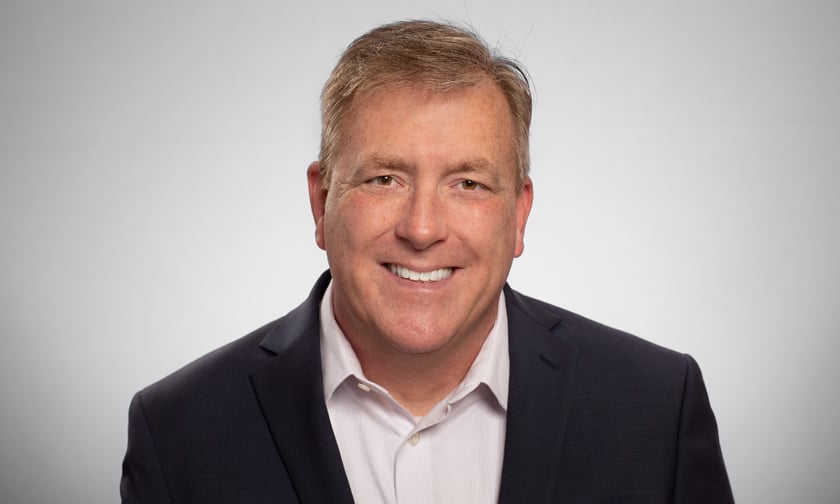
Franchise restaurant owners who expand their operations without updating their insurance plans may be leaving themselves exposed to serious risk. “You might take whatever this set of minimums were at [the first] one and they just duplicate it,” said William Pfaffmann (pictured), partner at Commercial Insurance Associates. “And then you find out when you get to 15, holy smokes, I’ve got all these massive gaps here.”
He pointed to the checklist approach some franchisors still use – lists that may appear thorough but often miss evolving exposures. Using one of the major QSR franchisors’ model as an example, Pfaffmann cited the basics: general liability, tenant legal liability, hired/non-owned auto, workers' compensation, and business property. “What’s not in there? Well, there’s no cyber requirement. There’s no EPLI requirement,” he said.
For owners focused on operations, not policy structure, these omissions can go unnoticed – until it’s too late. “We’re busy. We’re focused on the customers. We’re focused on our employees,” Pfaffmann said. “And so who’s thinking about my insurance piece? I’m just following what they told me to do.”
New franchisees often treat insurance as a commodity, said Kevin Pomeroy, managing partner at the firm. “Everybody thinks that insurance is just a box and everybody fits into that box,” he said. But that assumption rarely holds as businesses scale. What worked for one location can fail to protect multiple sites from evolving or cumulative risks.
Among the most common shortfalls, Pomeroy said, are cyber liability and employment practices liability insurance (EPLI). “Cyber insurance is the biggest overlooked insurance in all lines, much less franchises,” he said. Many franchisees rely on third-party payment processors and assume that limits their exposure, but most base policies only include nominal cyber protection. “They get a little bit of cyber coverage thrown in, normally between $50,000 and $100,000,” he said. “If you’ve ever had any experience with a cyber claim, that’s not going to even touch the surface.”
He also challenged the view that insurers habitually deny valid claims. “Insurance companies don’t not pay claims,” Pomeroy said. “If they’re not paying a claim, it means that you bought a product that didn’t have coverage for it.” The root issue, he added, is often a misalignment between assumed and actual risk transfer.
As franchises grow, insurance costs can rise dramatically – often surpassing $250,000 annually. At that scale, Pfaffmann said, a reassessment becomes essential. “We kind of plug in with the client and not only look at the coverages, but look at the other side of that equation,” he said. “What do you have going on in your restaurants, and how can we help you with your processes to maximize that?”
In today’s inflationary environment, cost control is top of mind. “Margins are going down,” Pomeroy said. “Every franchise you talk to is worried about margins.” That makes comprehensive coverage reviews more critical than ever. “So often, people are paying for things they might not even need,” he said.
Time spent with a broker upfront, he noted, can lead to sharper coverage and smarter cost management. “We can normally tailor a program that cuts out the fat,” he said. “Make sure what you are actually paying for is what’s going to protect you the most against your risk.”
Delays in reporting claims can carry a steep price. “Every claim that’s reported 48 hours after the incident, on average, costs 73% more than a claim that was reported within the first four hours,” Pomeroy said. “So many people don’t realize that.”
That’s why the broker’s role should continue beyond the sale, he added. “All those insurance guys make the same money,” he said. “What agent are you working with that’s going to help you the most to manage your claim from the beginning?”
For franchisees managing 10, 15, or even 30 locations, risks multiply faster than coverage evolves. To avoid exposure, owners need to treat insurance as a dynamic strategy – not a static requirement. “Know exactly what risks you’ve eliminated, the ones you’ve transferred correctly, and the ones you’ve assumed,” Pomeroy said. “That’s the magic trick.”




